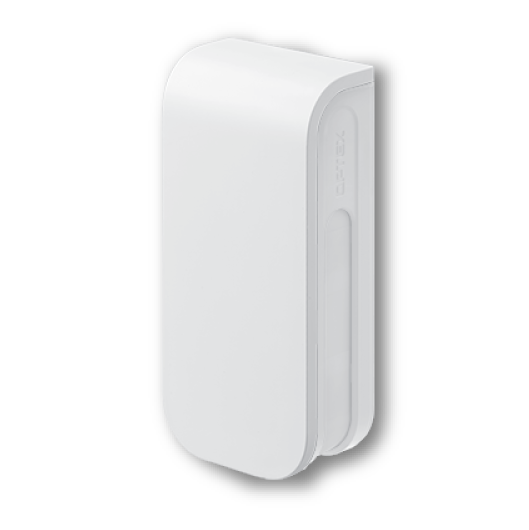
Advanced Anti-Theft Alarm System

Today’s world is more important than ever to protect our valuable assets. An Anti-Theft Alarm System is the first line of defense against unauthorized access, burglary and vandalism whether it’s a residential property, commercial building, warehouse, industrial facility or critical infrastructure. Modern alarm systems are designed to detect intrusion attempts in real time and immediately alert property owners or security personnel, thus helping to prevent theft before significant damage can occur.

What is a Anti-Theft Alarm System?

The Anti-Theft Alarm System is an electronic security system that identifies the unauthorized entry into a protected area and promptly sounds an alarm. Where an intruder attempts to gain entrance through a door, window, fence or other restricted area, the system triggers alarms like sirens, flashing lights, mobile notifications or alerts to a monitoring station. These systems combine sensors, smart controllers and communication technologies to allow for fast detection and response.

How Does an Anti-Theft Alarm System Work?

An anti-theft alarm system works on a number of synchronized processes which assist in recognizing illegal entry, investigating the possible threat and responding promptly. Such solutions, integrating advanced sensors, central control panel and real-time notification systems, offer all-around protection of homes, businesses, warehouses, industrial facilities and other critical infrastructure.

Anti theft alarm system

1. Detection

The first stage of an anti-theft alarm system is detection. Sensors at strategic points continuously detect the area to be protected for any indication of unauthorized entry. Infrared or microwave motion detectors sense human movement within preset areas, and door and window sensors instantly discover if an entry has been opened without permission. Glass break sensors detect the unique sound frequency and vibration that occurs when glass is broken, giving a quick detection of forced entry. Perimeter sensors fitted along fences, gates and boundary walls detect attempts to breach the perimeter before an intruder reaches the building, providing an essential early warning layer for larger properties.

2. Signal Processing

A sensor that recognizes suspicious activity immediately sends a signal to the system’s control panel, the brain of the entire security solution. Several sensors provide information to the control panel . The control panel checks if the event is a real intrusion and filters false alarms due to environmental factors or authorized access . It decides what to do based on predefined security settings and orchestrates the appropriate response within seconds.

3. Alarm Activation

When the system finds out that someone is getting in where they should not be it turns on a lot of warning things to scare the person away and tell the people who need to know. It makes a loud noise to get peoples attention and make the person not want to do anything else that is not allowed. At the time it makes bright lights flash to make the alarm more visible especially at night or when it is not very bright. The system also sends messages away to the people who own the property or take care of the building so they can see what is happening from somewhere else. They get these messages on their phone or by email. If the system is connected to a group of people who watch the security or a team that is, at the building it sends them a message away so these people know what is happening and can do something about it.

4. Response

The final stage is response, where security personnel or property owners take appropriate action based on the alerts received. CCTV cameras integrated with the alarm system allow security teams to verify the incident in real time and assess the nature of the threat. Depending on the severity of the intrusion, on-site guards can be dispatched to investigate, or local law enforcement authorities can be notified for immediate intervention. This rapid response capability minimizes potential losses, enhances occupant safety, and significantly improves the overall effectiveness of the anti-theft security system.

Anti-Theft Alarm System: A Combination of Multi-Layer Security

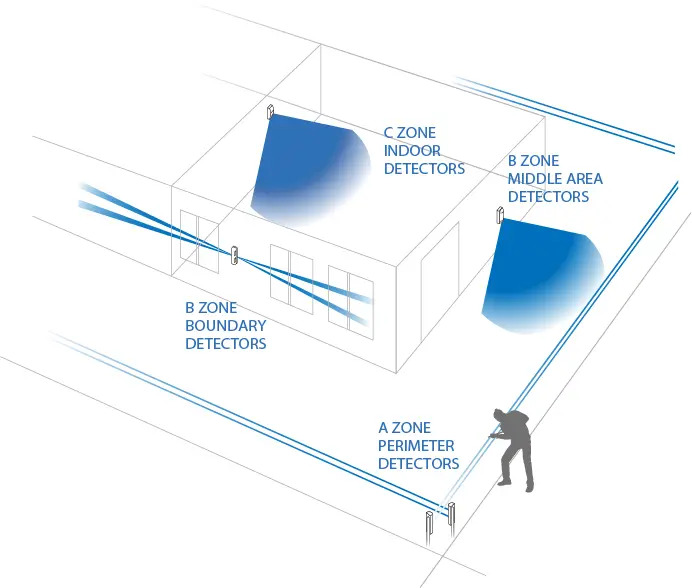
An Anti-Theft Alarm System is built on a multi-layer security approach, where each layer is designed to detect, delay, verify, and respond to intrusion attempts. Instead of depending on a single security device, multiple technologies work together to provide complete protection from the property’s perimeter to its most sensitive indoor areas.
level surveillance

Level 1: Perimeter Protection (A Zone)
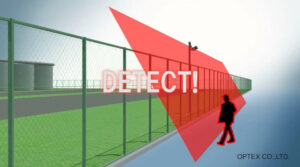
pidsThe first layer of security is about keeping the outside of the property safe. This means stopping someone who should not be there from getting to the building. If someone tries to get in the security people can catch them before they do any harm. They use tools like sensors on the fence special fibers that can tell if someone is touching the fence and beams of light that go back and forth. They also use microwaves and lasers to watch the area. You can find these tools at places like factories, warehouses and power plants. They are also used at airports and military bases, which need to be very safe. The security people use these tools to protect the area around the building. This is the step, in keeping the property safe.

Level 2: Outdoor Detection (B Zone)
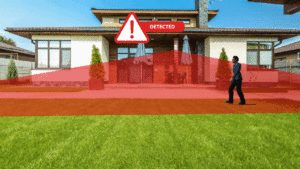
garden protection 1The second layer is for areas inside the perimeter but outside the building. It keeps an eye on parking lots and loading docks and gardens and pathways and storage yards. These are all areas where something suspicious might happen. This layer uses sensors like laser LiDAR sensors and outdoor passive infrared detectors and dual-technology motion sensors and radar sensors. These devices are really good at figuring out what is moving around. They can tell if it is a person or a car or an animal or just the wind blowing through the trees. They can even tell when it is raining or when plants are moving in the wind. This helps a lot because it means there are not many false alarms. The second layer is really good at detecting things that’re suspicious. The second layer and its sensors are very important, for security.

Level 3: Building Entry Protection (B Zone)

RESIDENSIAL 3

The third layer is like a safety net for the building. It makes sure that nobody can get in without being seen. The doors and windows and all the other ways to get in are watched by sensors. These sensors are like door contact sensors and window sensors and glass-break detectors. We also have locks and electronic access control systems. If somebody tries to get in without permission or breaks a window the system will sound an alarm away. It will also record what happened. Send a message to the security people or the monitoring center so they can do something about it. The system is always looking out for the building. Makes sure that the security people know if something is wrong, with the doors or windows or any other way to get in.

Level 4: Indoor Intrusion Detection (C Zone)

admin ajax 1

If someone gets into the building the fourth layer of security helps by keeping an eye on what’s going on inside. There are devices like motion detectors that use PIR and microwaves and sensors in the ceiling that check if someone is in a room. These security devices are usually put in offices server rooms, warehouses, vaults, laboratories, control rooms and other important places. The security devices watch for any movement inside these areas. They send a report right away if they find something that is not supposed to be happening. The fourth layer of security and the indoor intrusion detection devices, like PIR motion detectors and dual-technology detectors work together to keep the building safe.

Level 5: Video Surveillance

portrait male security guard with radio station camera screens 1The fifth layer enhances security through intelligent video surveillance, allowing alarms to be visually verified before any response is initiated. Modern CCTV systems incorporate advanced technologies such as AI-powered human detection, vehicle detection, facial recognition, license plate recognition, intelligent video analytics, and automatic event recording. By providing real-time visual confirmation of incidents, video surveillance helps security teams assess threats more accurately, reduces false alarms, and supplies valuable evidence for investigations.

Level 6: Alarm and Notification System
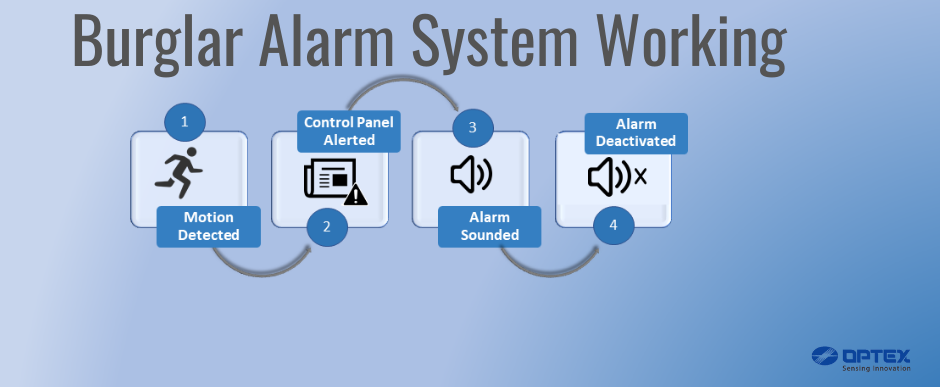
Burglar Alarm System Working 2 1When someone breaks in and it is confirmed the sixth layer kicks in away and does a lot of things to let people in the building and security staff know what is happening. The system can do things like make loud noises with sirens turn on flashing lights send text messages notifications on your phone and emails, to the people who are supposed to get them. It can also tell people at the monitoring centers start recording with the security cameras and use the public address system to make announcements when it needs to. All of these things happen together to make sure the right people know what is going on away so they can respond quickly and effectively to the security incident. The security incident gets a lot of attention from the system and the people who are supposed to take care of it.

Level 7: Security Management Platform

The final layer is a centralized Security Management Platform that integrates all security devices into a single monitoring and control interface. This unified platform allows security operators to monitor live events, view CCTV footage, manage access control systems, receive and acknowledge alarm notifications, generate security reports, and continuously monitor the health and status of all connected devices. By consolidating information from every security layer, the platform enables faster decision-making, improved situational awareness, and more efficient management of the entire anti-theft security system.

Key Differences Between an Anti-Theft Alarm System

  • Detection Approach – Delivers a proactive, multi-layer security solution that detects intruders before they can access critical assets.
  • Detection Coverage – Protects the entire property through layered security, including perimeter, outdoor areas, building entrances, indoor spaces, and restricted zones.
  • Perimeter Protection – Detects intruders at the property’s boundary using laser scanners, active infrared beam sensors, fence-mounted sensors, and fiber optic intrusion detection systems.
  • Outdoor Intrusion Detection – Uses intelligent outdoor PIR, LiDAR, laser, and dual-technology sensors capable of accurately detecting human movement while minimizing false alarms.
  • Early Threat Detection – Detects intrusion before an intruder reaches the building, enabling faster response and preventing unauthorized access.
  • False Alarm Immunity – Advanced sensing technologies distinguish between people, vehicles, animals, and environmental factors, significantly reducing false alarms.
  • Video Verification – Seamlessly integrates with CCTV and VMS platforms to provide real-time video verification and intelligent event confirmation.
  • System Integration – Integrates intrusion detection sensors, CCTV, access control, public address systems, and centralized security management software into one unified platform.
  • Real-Time Alerts – Provides instant notifications through mobile applications, SMS, email, and monitoring centers for rapid incident response.
  • Scalability – Easily scalable from small commercial facilities to large industrial sites and critical infrastructure.
  • Ideal Applications – Warehouses, data centers, manufacturing plants, airports, seaports, power plants, logistics hubs, commercial campuses, defense facilities, and other critical infrastructure requiring high-performance intrusion detection.

OPTEX Anti-Theft Alarm Solutions – Multi-Layer Product Portfolio

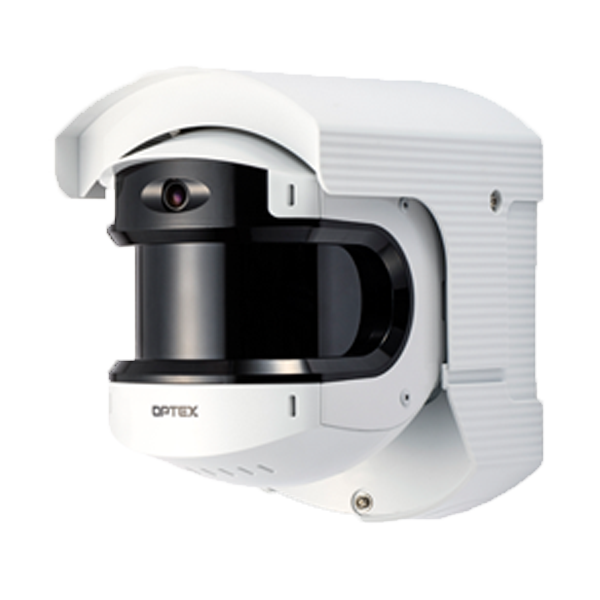
  • Perimeter Protection – The first layer of the OPTEX Anti-Theft Alarm Solution is about securing the outer boundary of a property. This means it stops intruders from getting to the building. OPTEX Anti-Theft Alarm Solution uses some cool technologies like the Beam Sensor and REDSCAN which includes the SL Series. It also uses the Fiber SenSys solutions. The Fiber SenSys solutions include things like EchoPoint, Point Defender PD500, FD508 and FD332IP. These OPTEX Anti-Theft Alarm Solution technologies are used to detect people trying to get in along fences, walls and open areas around a property. You can find the OPTEX Anti-Theft Alarm Solution in lots of places, like data centers, airports, power plants, defense facilities, industrial plants and warehouses. These are all places where it’s really important to know if someone is trying to get in from the outside.
  • Outdoor intrusion detection – This is the layer of protection. It keeps an eye on areas like parking lots and loading docks. It also watches over gardens and campuses. Storage yards and restricted zones are protected too. OPTEX has sensors that work very well outside. They are called REDSCAN, HX Series, WXI Series and VXI Series. These sensors are smart. Can tell when a person is moving around. They do not get confused by animals or bad weather. This makes them perfect for industrial areas. Outdoor intrusion detection systems like these are very useful. OPTEX systems are good, for areas because they can detect human movement.
  •  Building Entry Protection – The third layer focuses on safeguarding building entry points against unauthorized access. OPTEX BXS Series, FTN Series, provide reliable protection for doors, windows, and gates. These solutions can also be integrated with electronic door contacts and access control systems, ensuring that any unauthorized entry immediately triggers an alarm and alerts security personnel.
  • Indoor Intrusion Detection – If an intruder enters the building, OPTEX indoor detection solutions provide another critical layer of security. Products such as the FLX Series, FX Series, and AP Series dual-technology motion detectors continuously monitor offices, warehouses, server rooms, control rooms, vaults, and restricted areas. These high-performance indoor sensors accurately detect unauthorized movement while maintaining stable performance and reducing nuisance alarms, ensuring reliable protection of valuable assets.

Product Lineup

SL 200QDM SL 350QDM SL 650QDM 1 4
SL Series
RLS 3060 Series
RLS Series
BXS-ST
BXS Series
FLX-P-ST
FLX Series

Conclusion

By combining advanced perimeter detection, outdoor and indoor intrusion sensors, intelligent video verification, alarm management, and centralized monitoring, OPTEX delivers a true multi-layer Anti-Theft Alarm Solution. This integrated approach enables organizations to detect threats at the earliest stage, verify incidents with confidence, and respond rapidly to protect people, property, and critical infrastructure from theft, intrusion, and unauthorized access.


FAQs

An anti-theft alarm system is a security mechanism designed to protect property from unauthorized access or theft. Typically used in vehicles, homes, and businesses, it consists of sensors that detect unauthorized entry, movement, or tampering. When triggered, the system activates alarms such as sirens, flashing lights, or alerts to notify owners or security personnel. Advanced systems may integrate with mobile apps for remote monitoring and control. The goal is to deter intruders and alert authorities promptly, enhancing security and providing peace of mind to property owners.

Anti-theft alarms work by detecting unauthorized access or movement and alerting the owner or authorities. They typically use sensors such as motion detectors, door/window contacts. When these sensors are triggered by an intrusion, the alarm system activates a loud siren and may send alerts via phone or a monitoring service. Advanced systems can include cameras for visual verification. The goal is to deter thieves, notify owners, and prompt a quick response to prevent or minimize theft.

Anti-theft alarms are triggered by various sensors designed to detect unauthorized access or suspicious activity. Common triggers include motion detectors sensing movement within a protected area, door/window sensors detecting openings. Additionally, some alarms are activated by vibrations or impacts, such as those from tampering or forced entry. When these sensors are activated, the alarm sounds, and notifications are sent to the owner or monitoring service.

To set an anti-theft alarm, follow these steps:

  1. Install Sensors: Place motion detectors, door/window contacts, and other sensors in strategic locations.
  2. Connect Control Panel: Link all sensors to a central control panel.
  3. Power Up: Ensure the system is properly powered, either through batteries or a power outlet.
  4. Configure Settings: Program the alarm system using the control panel or a mobile app, setting up zones and sensitivity levels.
  5. Activate System: Arm the alarm by entering a code on the keypad or using a remote control or app.
  6. Test: Verify the system by triggering sensors to ensure they activate the alarm.

An anti-theft system typically employs a combination of sensors to ensure comprehensive protection. Motion sensors, which detect movement using infrared or microwave technology, are common for monitoring areas. Door and window sensors use magnetic contacts to trigger an alarm when opened. 

Yes, anti-theft systems are effective in deterring and preventing theft. By using various sensors such as motion detectors, door/window contacts, and vibration sensors, these systems detect unauthorized access and trigger alarms, alerting owners and authorities. The loud sirens and notifications act as deterrents, making it difficult for thieves to operate unnoticed.

Anti-theft systems are activated by sensors designed to detect unauthorized access or suspicious activity. Common activators include motion detectors sensing movement, door/window sensors. Additionally, proximity sensors, which detect objects or people within a certain range, can also trigger the system. Once these sensors are activated, the system sounds an alarm and may send alerts to the owner or monitoring service, prompting a swift response.

Theft alert is a notification system that informs owners or authorities of a potential theft or unauthorized access to their property. It is activated by security systems when sensors, such as motion detectors, door/window contacts. Upon activation, the system sends alerts through various means, including loud sirens, text messages, phone calls, or app notifications. Some advanced systems also provide real-time updates. Theft alerts serve to deter thieves, prompt immediate action, and help prevent or minimize loss by ensuring a swift response to the security breach.

Our Products

Scroll to Top