LASER Security System
What Is a Laser Security System? How It Works and Where It Is Used
This article explains how laser security systems work, where they are used, and how laser scan sensors can support early intrusion detection in different security applications.
In India, laser security systems are used in specialized applications where early intrusion detection, accurate area monitoring, and integration with CCTV or alarm systems are important. These applications include not only industrial facilities and data centers, but also critical facilities, transportation infrastructure, and other restricted areas where early detection of unauthorized access is especially valuable.
What Is a Laser Security System?
A laser security system is a security solution that uses laser-based sensing technology to detect unauthorized intrusion, as well as the passage or approach of people and objects. Among these technologies, LiDAR (Light Detection and Ranging) uses laser beams to measure the distance and position of objects, enabling highly accurate detection of people and objects within a designated detection area.
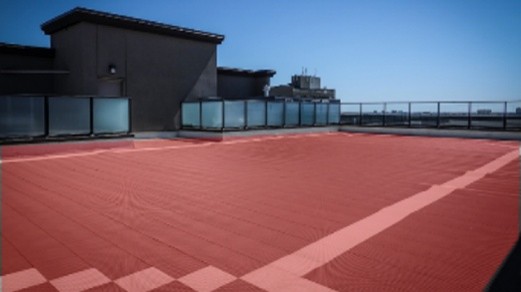
In security applications, laser security systems can be used in locations where early intrusion detection is important, such as fence lines, building perimeters, rooftops, restricted areas, and server rooms. When integrated with CCTV cameras and alarm systems, they contribute to a multi-layered security design by supporting the entire process from detection to verification and response.
How Does a Laser Security System Work?
The operating principle of a laser security system depends on the sensing technology used. In LiDAR and laser scanning systems, laser beams are emitted across a designated detection area. By analyzing the reflected light returned from objects, the sensor can determine their distance and position. This enables the system to detect when people or objects enter the detection area and identify intrusion or suspicious activity.
The basic process is as follows:
- The sensor scans the designated detection area using laser beams.
- When a person or object enters the detection area, the sensor determines its size, position, and distance based on the reflected laser signals.
- The sensor analyzes factors such as the object’s size, movement speed, and distance to determine whether it represents an intrusion or suspicious activity.
- After detection, the system can integrate with alarm systems, surveillance cameras, and video management systems (VMS), allowing security personnel to verify the situation and take appropriate action.
In other words, a laser security system does more than simply record video. By using sensors to detect intrusion or suspicious movement and triggering alarms or video verification when needed, it helps security teams respond more quickly to potential threats.
Where Are Laser Security Systems Used?
Laser security systems are used in a wide range of environments, from residential properties to high-security facilities.
This section explains some of the most common applications, with a particular focus on perimeter protection, industrial facilities and warehouses, data centers, and the protection of high-value assets in museums.
Beyond these applications, laser security systems are also deployed in specialized environments that require a higher level of security, such as transportation infrastructure and critical facilities. Later in this article, you can see OPTEX case studies in India to show how these technologies are used in real-world security applications.
Perimeter Security
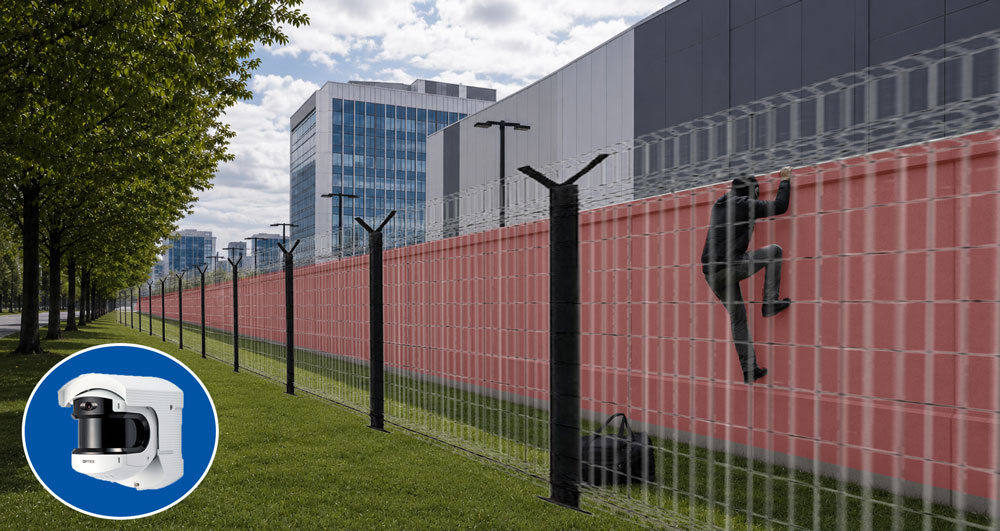
Perimeter protection is one of the most common applications of laser security systems. By establishing detection zones along fence lines, around gates, at site entrances, or across open boundaries where no physical fence exists, potential intrusions can be detected at an early stage—before an intruder reaches a building or critical asset.
Laser and LiDAR sensors can create a virtual laser wall around a site, allowing security teams to clearly define and monitor protected boundaries. They can detect suspicious approaches near fences and identify intrusion attempts such as crawling, helping to strengthen perimeter security.
Industrial Facilities and Warehouses
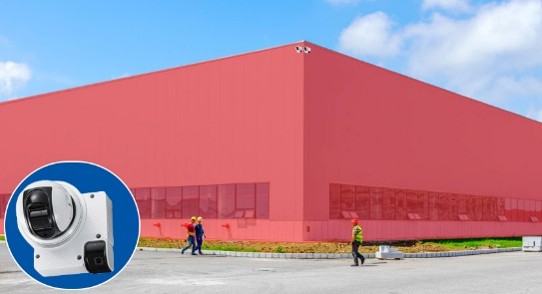
Industrial facilities, warehouses, and logistics centers face multiple security risks, including unauthorized access through loading areas, outdoor storage yards, material storage zones, rooftops, external walls, and perimeter fences. Theft, vandalism, and unauthorized access to critical equipment can lead to operational disruptions and shipping delays, potentially affecting business continuity and customer trust.
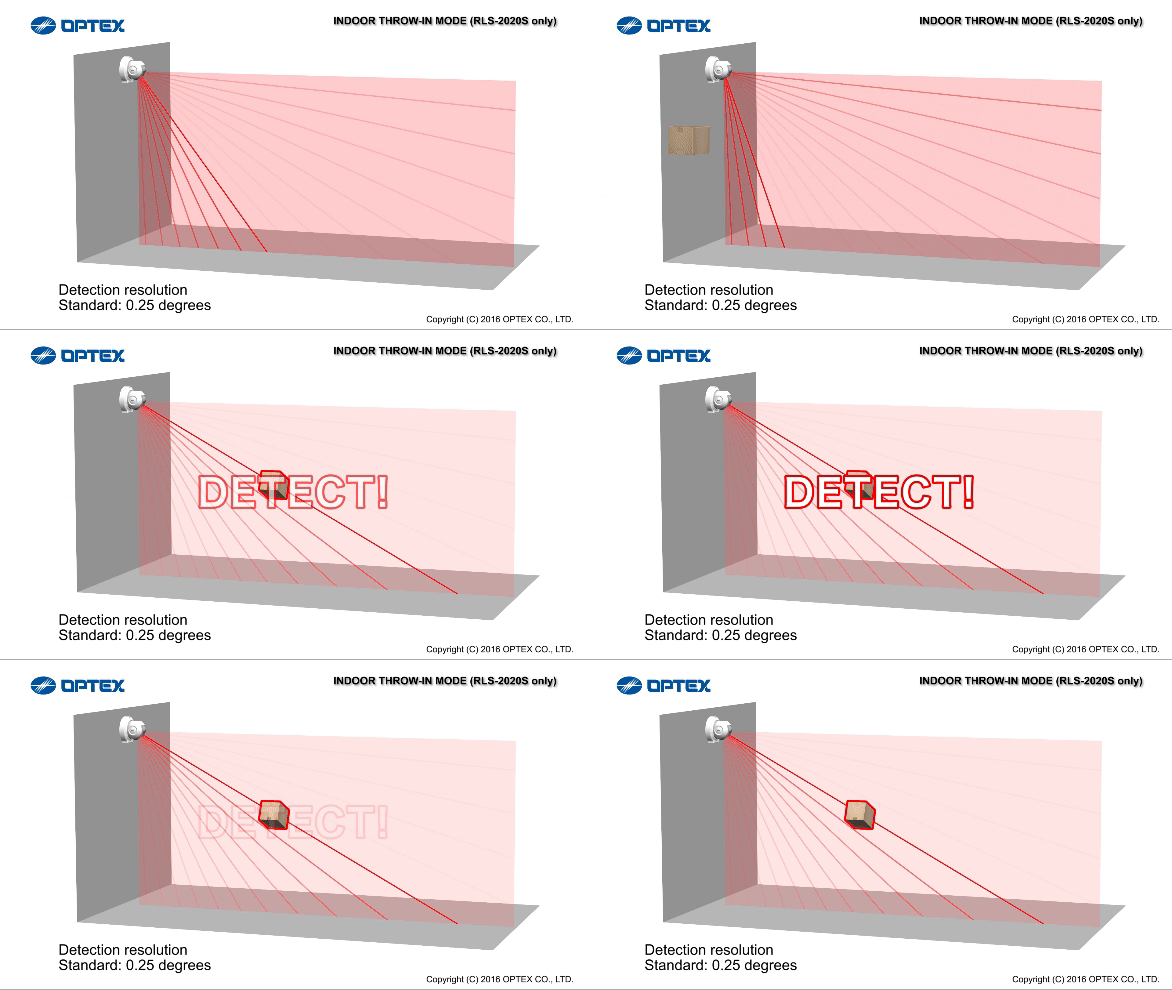
Long-range LiDAR sensors are well suited for monitoring large sites and outdoor areas. Depending on the model and configuration, they can detect not only intruders but also thrown objects and small objects. This enables security teams to identify unusual activities in real time and respond quickly to potential security incidents.
Data Centers
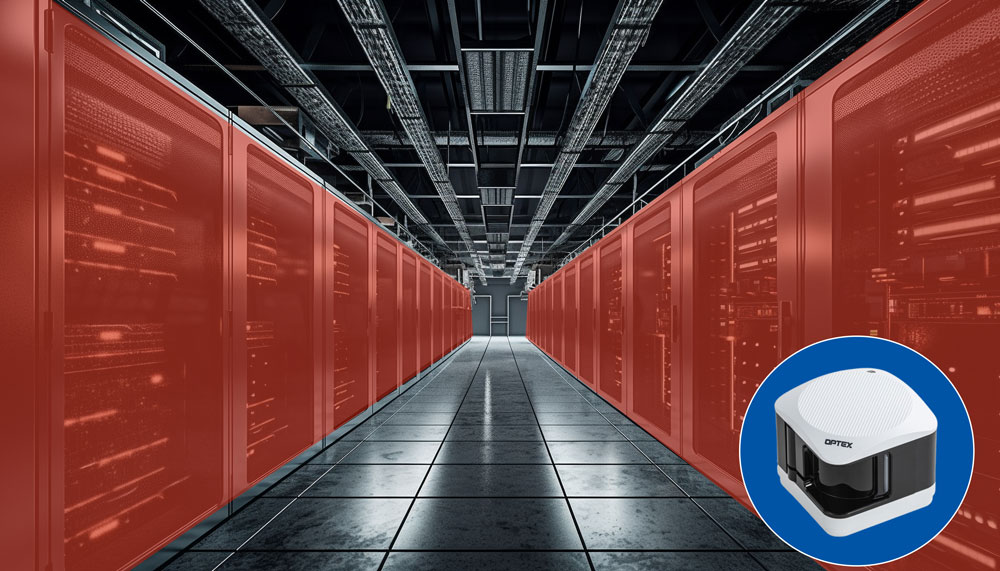
Protecting server racks and other critical equipment is a key security requirement in data centers. Laser scanning sensors can create area-based detection zones, making them suitable not only for protecting server racks but also for detecting unauthorized access through pathways that may be difficult to monitor with cameras alone, such as ceiling spaces and underfloor areas.
In addition, laser-based sensors are less affected by lighting conditions than camera-based systems. This allows them to continue detecting intrusions even in low-light or dark environments, such as server rooms.
Museums, Galleries, and High-Value Assets
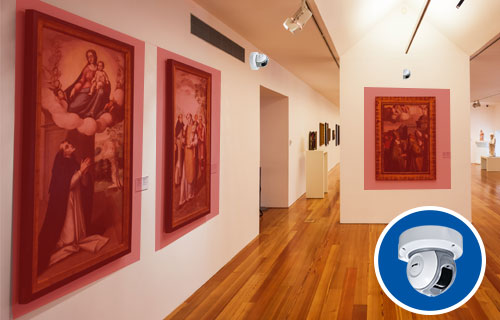
Museums and galleries face the challenge of protecting valuable exhibits without affecting the visitor experience. Laser security systems can create invisible detection zones around or in front of artworks and other valuable assets.
If a visitor gets too close to an exhibit or reaches toward it, the system can detect the action before physical contact occurs. This enables security personnel to be notified and allows localized warnings to be triggered, helping protect valuable assets while maintaining an open and welcoming exhibition environment
| Series | Main Applications | Key Points |
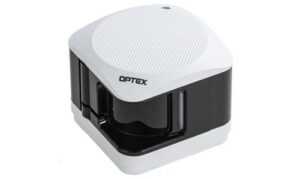
| REDSCAN Pro | Perimeter, rooftop, large sites | Long-range detection, wide- area coverage |
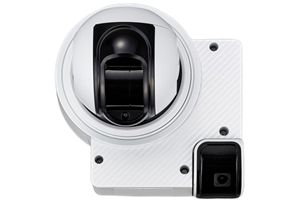
| REDSCAN mini-Pro | Building perimeter, rooftop, restricted areas | Area detection, VMS integration, built-in camera depending on model |
| REDSCAN mini | Asset protection, museums, indoor/outdoor area protection | Compact laser scan detection |
| REDSCAN Lite | Server racks, narrow indoor high-security areas | Short-range indoor LiDAR, easy setup |
Laser Security Systems in India: OPTEX Example Applications
In India, OPTEX laser security systems have been used in specialized applications where early intrusion detection, accurate area monitoring, and integration with security systems are important. The following examples show how laser scan sensors can support security in critical facilities, transportation infrastructure, and restricted areas.
Perimeter Intrusion Detection for a Critical Facility
At a defense-related facility in India, OPTEX LiDAR sensors were used to monitor vulnerable entry points and critical building areas. The system created mapped detection areas to identify unauthorized entry and send real-time alerts to the security team. By integrating with the customer’s VMS, the sensors supported faster verification and response to intrusion events.
Runway Intrusion Detection at an Airport
At an airport in India, OPTEX laser scan sensors were used to detect unauthorized access to a runway area. By monitoring movement in the protected zone and linking detection events with alarms or CCTV, the system supported earlier verification and response.
Metro Tunnel Entrance Protection for Rail Infrastructure
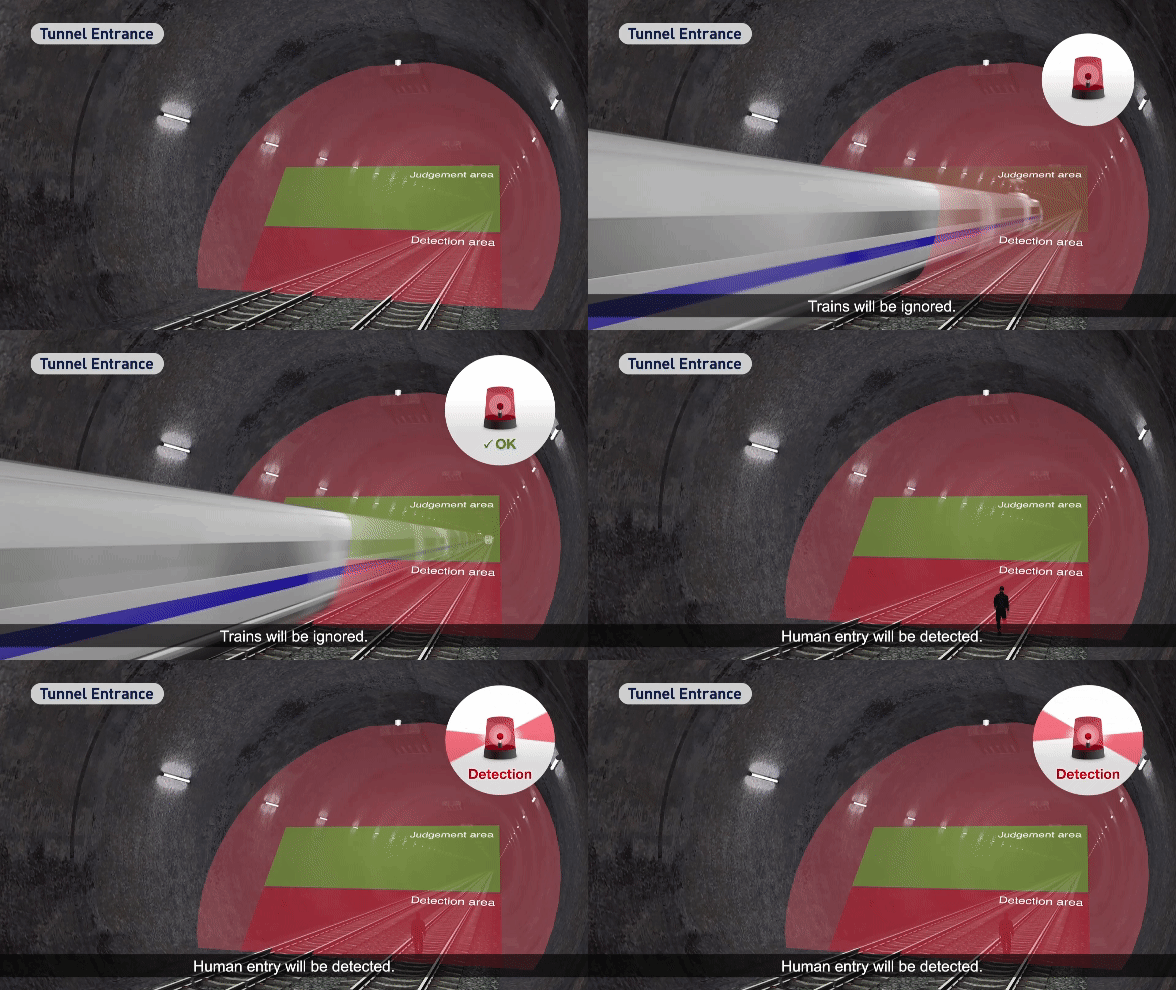
For a metro tunnel project in India, OPTEX LiDAR sensors were used to create virtual detection curtains across tunnel openings. The system helped detect people or objects entering the protected tunnel area while filtering non-threat events such as passing trains or environmental changes.
Key Differences Between Laser Security Systems
The performance and ideal applications of laser security systems vary depending on the technology and product used. When selecting a system, it is important to consider the following factors:
- Detection Range – Laser security systems are available in a range of models, from short-range sensors to long-range solutions designed for perimeter protection and rooftop monitoring.
- Indoor or Outdoor Use – Indoor and outdoor environments have different requirements in terms of environmental resistance, installation conditions, and system configuration.
- Environmental Resistance – For outdoor applications, it is important to consider environmental factors such as rain, small animals, swaying vegetation, and direct sunlight.
- Detection Accuracy – Models capable of determining an object’s size, speed, and distance can more accurately distinguish intrusions and suspicious activity while helping to reduce false alarms.
- System Integration – Compatibility with video management systems (VMS), alarm systems, and communication protocols varies by product.
- Installation and Adjustment Flexibility – In addition to mounting options such as walls, ceilings, and poles, ease of adjusting sensor angle, sensitivity, and detection zones should also be considered.
OPTEX Laser Security Solutions
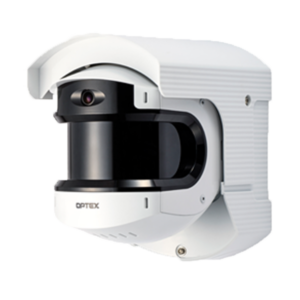
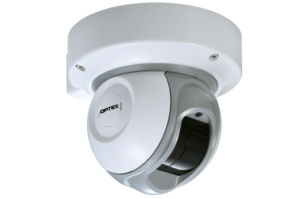
OPTEX offers the REDSCAN series of LiDAR sensors based on laser scanning technology. REDSCAN sensors scan a designated detection area with laser beams and detect intrusion or suspicious activity based on an object’s size, speed, and distance from the sensor. When integrated with CCTV cameras and video management systems (VMS), REDSCAN helps security teams verify events and respond quickly, reducing reliance on continuous visual monitoring alone.
Key Features of the REDSCAN Series
- Wide-Area and Long-Range Detection – The RLS-50100V supports detection areas of up to 50 × 100m, while the RLS-3060V covers up to 30 × 60m. These models are well suited for protecting large perimeters, rooftops, and other extensive outdoor areas.
- Object-Based High-Precision Detection – By analyzing an object’s size, speed, and distance from the sensor, REDSCAN can more accurately identify intrusion and suspicious activity while helping to reduce false alarms.
- Reliable Performance in Various Environments – Selected models are designed to deliver stable detection performance in challenging environments, including outdoor locations and low-light conditions, making them suitable for perimeter protection and the security of critical areas.
- System Integration with CCTV and VMS – REDSCAN supports integration with CCTV systems, NVRs, VMS platforms, and alarm systems. Using protocols such as ONVIF, it can be connected to existing security and surveillance infrastructures.
- Diverse Product Lineup for Optimal Selection – The REDSCAN lineup includes long-range models, models with built-in cameras, and models that can be configured for applications such as detecting objects thrown into or out of a protected area. Users can select a suitable sensor based on the monitoring area, installation environment, and integration requirement.
REDSCAN Product Lineup
| Series | REDSCAN Pro | REDSCAN mini | REDSCAN mini-Pro | REDSCAN Lite | |||
|---|---|---|---|---|---|---|---|
| Models | RLS-50100V | RLS-3060V | RLS-2020S | RLS-2020I | RLS-2020V | RLS-2020A | RLS-1010L |
| Detection Range | 50×100m, 190° | 30×60m, 190° | 20×20m, 95° | 20×20m, 95° | 10×10m, 95° | ||
| Camera | ✓ | ✓ | N/A | N/A | ✓ | N/A | N/A |
| Installation Location | Indoor/Outdoor | Indoor/Outdoor | Indoor | Indoor/Outdoor | Indoor | ||
| Detection Resolution | Indoor & Outdoor & Indoor throw-in mode: 0.25 degrees High-resolution mode: 0.125 degrees | 0.25 degrees | 0.125 degrees | 0.25 degrees | 0.125 degrees | ||
| Communication Port | Ethernet RJ45 10Base-T/100BASE-TX (Auto negotiation) | RS-485 | |||||
| Protocol | UDP/TCP/HTTP/HTTPS/IPV4/DNS/DHCP/SNMPv1-v3/NTP/WS-Discovery/ONVIF | TCP/IP, UDP/IP, DHCP, DNS, HTTP, HTTPS, FTP, SNMPv1-v3, ICMP, ARP | UDP/TCP/HTTP/HTTPS/IPV4/IPV6/DNS/DHCP/SNMPv1-v3/NTP/WS-Discovery/ONVIF/IEEE802.1X | TBC | |||
| Zone Creation | 8 zones | 4 zones | 8 zones | 1 zone | |||
| IP rate | IP66 | IP55 | |||||
| Laser Safety | Class1 laser protection class | ||||||
Conclusion
Laser security systems help detect intrusion and suspicious activity at an early stage, enabling faster verification and response. LiDAR and laser scanning sensors can accurately detect objects based on their size, speed, and distance. Combined with CCTV cameras and VMS platforms, they support sensor-triggered video verification and efficient security operations.
The OPTEX REDSCAN series provides LiDAR-based detection solutions for a wide range of security applications and site requirements.
FAQ
A laser security system uses laser-based sensing technology to detect unauthorized intrusion and the movement of people or objects. In LiDAR and laser scanning systems, sensors measure the distance and position of objects, enabling the detection of intrusion and suspicious activity within a designated area.
Laser security systems are used in a wide range of applications, including residential properties, commercial buildings, offices, factories, warehouses, logistics facilities, data centers, critical infrastructure, and museums. Requirements such as detection range, installation environment, and system integration vary depending on the application.
Yes. Outdoor laser security systems can be used to monitor perimeters, fence lines, gates, and building surroundings. Environmental factors such as rain, lighting conditions, temperature changes, vegetation, and animals should be considered when selecting a system.
Laser security systems and CCTV serve very different functions within a security strategy. A laser security system can be used to monitor intrusions by creating an invisible laser detection zone that immediately triggers an alarm when someone crosses it. It gives real-time detection, even in darkness or bad weather, and helps deter unauthorized entry before an incident happens. CCTV, on the other hand, is primarily used for video surveillance, where activities are recorded and monitored to offer visual evidence following or during an event. CCTV is only to see what happened . A laser security system is proactive and detects and alerts security . Both are extremely effective when used together .
Yes. Depending on the product and model, laser security systems can be integrated with CCTV cameras, NVRs, VMS platforms, and alarm systems. Some REDSCAN models support protocols such as ONVIF, allowing them to connect with existing video surveillance systems and enable sensor-triggered video verification and notifications.
Key considerations include the area to be protected, required detection range, indoor or outdoor installation conditions, detection accuracy, and compatibility with existing CCTV, VMS, and alarm systems. The most suitable solution will depend on the specific application and site requirements.
In India, laser security systems can be applied to specialized security applications such as critical facilities, airport-related infrastructure, metro tunnels, industrial facilities, data centers, and other restricted areas. They can help detect unauthorized access or suspicious movement at an early stage and support integration with CCTV, VMS, and alarm systems.
Get in touch with us
For further information, don’t hesitate to get in touch with us.
We are always willing to assist you and offer a solution that meets your requirements.